301b · LTM SpecialistOfficial blueprint · 27 objectivesRecorded on live BIG-IPLifetime access
301b · Earns F5-CTS, BIG-IP LTM
BIG-IP LTM Specialist: Maintain and Troubleshoot
For engineers preparing for the 301b exam. Work out why something built by someone else is not behaving, from a trace, a log or a set of statistics.
tcpdump and protocol analysis, iRule behaviour, AVR interpretation, HTTP and SSL handshake failures, monitor problems, device resource exhaustion, failover and config sync, taught against the twenty-seven official 301b blueprint objectives.
Full course €499. Covers all three sections of the 301b blueprint. Priority-list members get first access and launch pricing.
Pass the 301b within 90 days, or get a full refund.
Complete the course, sit the exam twice within 90 days, and if you fail both times I refund you in full. See the terms
Status: in build. I'm Graham Mattingley: F5 since 2008, certified since 2012, banking, aviation and government, and I teach every lesson myself.
Course overview
301b is the exam that completes F5 Certified Technology Specialist, BIG-IP LTM. Where 301a asks whether you can design a deployment, 301b asks whether you can work out what is wrong with one you did not build, from the evidence in front of you.
The course works through all three blueprint sections: virtual server connectivity and upgrade recovery, application issues through iRules, AVR, headers and packet captures, and device level failures including resource exhaustion, failover and config sync.
Aligns directly with the official 301b blueprint, covering all twenty-seven objectives across three sections.
What's included
Priority list
Join the 301b priority list
First access, launch pricing, and the occasional build update while I record it.
The outcome
What you will be able to do.
301b hands you evidence and asks what happened. A trace, a log extract, a set of statistics, a failed request. The skill it tests is reading them correctly under time pressure. After this course you will be able to:
- Read a packet capture properly: drops, RSTs, retransmits, ICMP errors and CMP demotion, and know which one you are looking at
- Decide where to capture: client side, server side or both, and what each vantage point will and will not show you
- Diagnose from HTTP headers: response codes, Cookie, Cache-Control, Vary, Content-Type and Host, and decoded POST data
- Find the cause of an SSL handshake failure, and prove it rather than guess it
- Interpret an iRule and its logs: identify the event where it went wrong and predict the effect on traffic
- Use AVR as a diagnostic tool: latency trends, tier bottlenecks and application attacks
- Solve monitor problems: capture monitor traffic, and set timing that matches the application rather than fighting it
- Explain a failover after the fact from logs and statistics, including config sync and device trust failures
You will leave this course able to work from evidence to root cause, which is the only thing 301b rewards.
Curriculum
All three sections of the 301b blueprint.
Section 1 – Troubleshoot Basic Virtual Server Connectivity Issues
Section 2 – Identify and Resolve Application Issues
Section 3 – Identify and Resolve LTM Device Issues
Included
Private course community
A private community shared with the other members of this course. Membership is permanent.
- Ask questions and get practical advice from people on the same path
- Share real scenarios, problems and solutions
- I'm in there too, and I answer
Optional
Add my time to the course
Every course comes in three packages: the course on its own, the course plus one hour of my 1:1 time (one session or two 30-minute sessions), or the course plus a live weekly Q&A with me while you study. Use the hour to:
- Review your 301b knowledge gaps
- Work through a real trace or log from your own environment
- Test your exam readiness with live questions
Package prices are shown at checkout.

Full video course
Animated slides for the concept, then GUI and CLI demonstrations: live packet capture analysis, header and trace walkthroughs, iRule debugging, AVR interpretation and device failure diagnosis, all mapped to the 301b blueprint.

Every diagnosis, on a live BIG-IP
Guided demonstrations from symptom to root cause: capture the traffic, read the trace, interpret the logs, check the statistics, confirm the fix. The reasoning is shown, not just the answer.

Evidence-based knowledge checks
Assessments after each module in the style of the exam. 301b is an evidence exam, so the questions give you output and ask what it means.
FAQs
Before you ask.
Does passing 301b give me the certification?
Do I need to pass 301a first?
How much production experience does 301b assume?
Does this course include practical diagnostic demonstrations?
What should I take after 301b?
Your instructor
I don't teach exam shortcuts. I teach how TMOS actually behaves under production traffic, and how to make confident decisions when it's 2 AM and something's on fire.
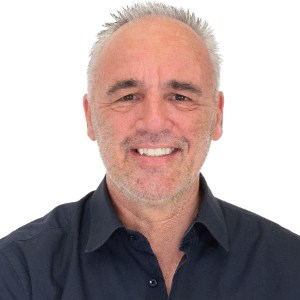
Graham Mattingley
F5 401 Certified Solution Expert · OWASP member
Thirty years in application development, twenty in application delivery, F5-certified for fourteen. I've deployed and secured F5 for banking, aviation and government across Europe, and taught this material face to face to the engineers who run it.
This is the operational knowledge I wish I'd had twenty years ago, distilled from production deployments you won't find in the official training.
How this course is delivered
- Structured video lessons mapped to the twenty-seven 301b blueprint objectives
- Live packet capture analysis with tcpdump, Wireshark and ssldump
- Header and trace walkthroughs taken from real production failures
- iRule debugging, AVR interpretation and monitor troubleshooting
- Device-level diagnosis: resource exhaustion, failover causes, config sync failures
- Self-paced, so you can study around work
- Diagnostic scenarios worked from evidence to cause, the way 301b tests it
Prerequisites
To sit the 301b exam you need F5 Certified Administrator, BIG-IP and a 301a pass. You need neither to take this course, and many engineers study both halves together.
Working LTM experience is strongly recommended:
- Familiarity with virtual servers, pools, monitors and profiles in production
- Basic comfort reading a packet capture
- An understanding of HTTP request and response structure
- Confidence with TMSH and the BIG-IP log files
A BIG-IP lab is recommended for hands-on practice, but every demonstration is recorded and yours for life, so you can revisit any diagnosis whenever you need it.
Lab licence helpLab licence assistance
I can help you obtain the F5 lab licence and get it installed and running on your own computer.
What happens next
- Join the priority list and I'll tell you the moment enrolment opens
- While I record it, you get the occasional trace or log to diagnose
- Priority-list members enrol first, at launch pricing