Official F5 blueprintsRecorded on live BIG-IPLifetime accessDesktop · iOS · Android
Courses
Every F5 exam, taught from production.
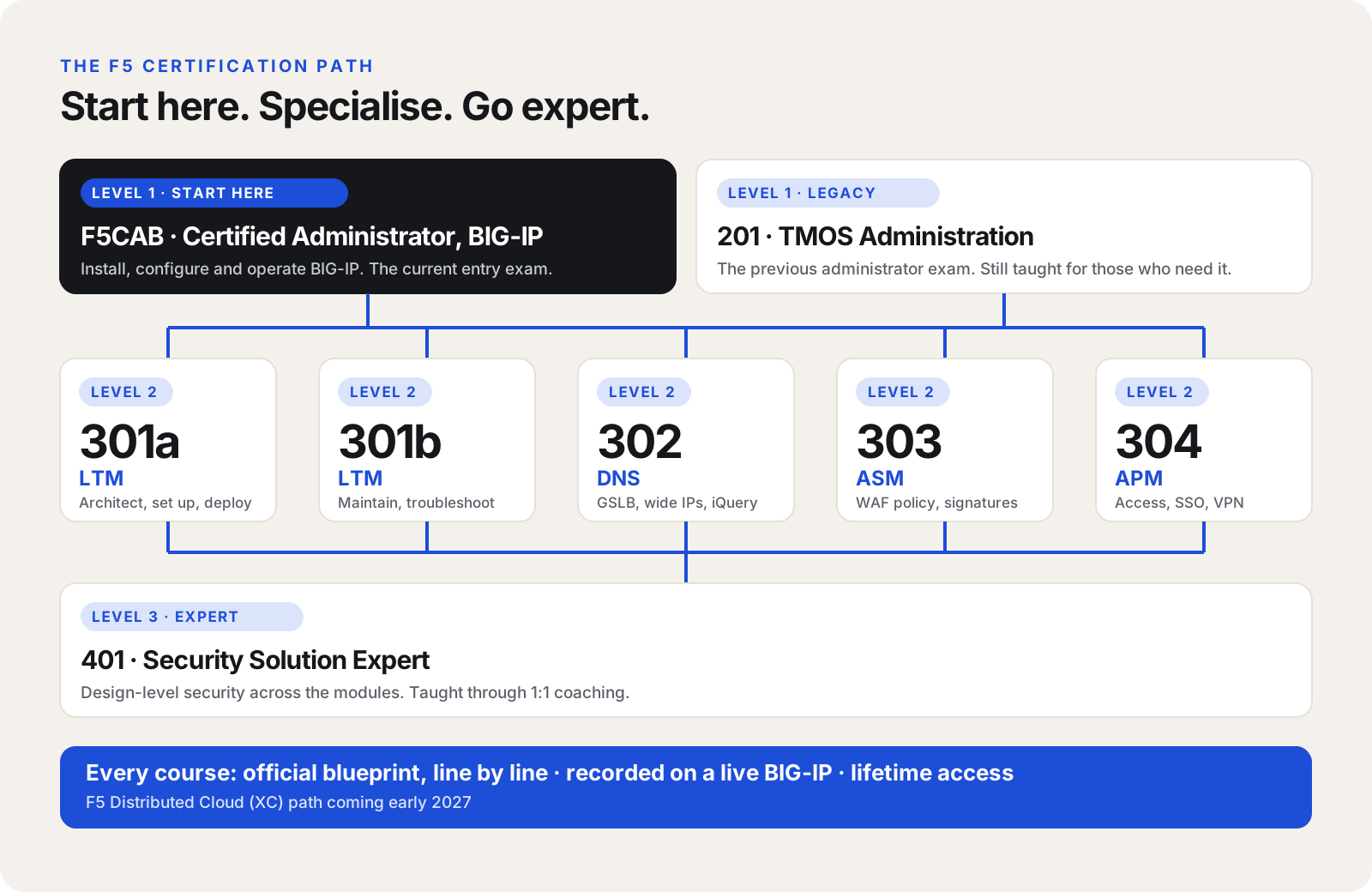
Start with the Administrator course or go straight to a specialist path in LTM, DNS, ASM or APM. Each course follows the official exam blueprint line by line and is recorded on a live BIG-IP, so you pass the exam and then run F5 with confidence.
I've worked with F5 since 2008, certified since 2012, teaching since 2013, and writing the applications behind it since 1995.
Pass your F5 exam within 90 days, or get a full refund.
Complete the course, sit the exam twice within 90 days, and if you fail both times I refund you in full. See the terms
Start here
The Administrator course. The foundation for everything else.
Install, configure and operate BIG-IP the way it's done in a real estate: how traffic is handled, how the platform is set up, and the day-to-day administration that keeps it running. Mapped to the F5 Certified Administrator (F5CAB) blueprint.
New to F5? Start here. Already running it? Go straight to a specialist path below.
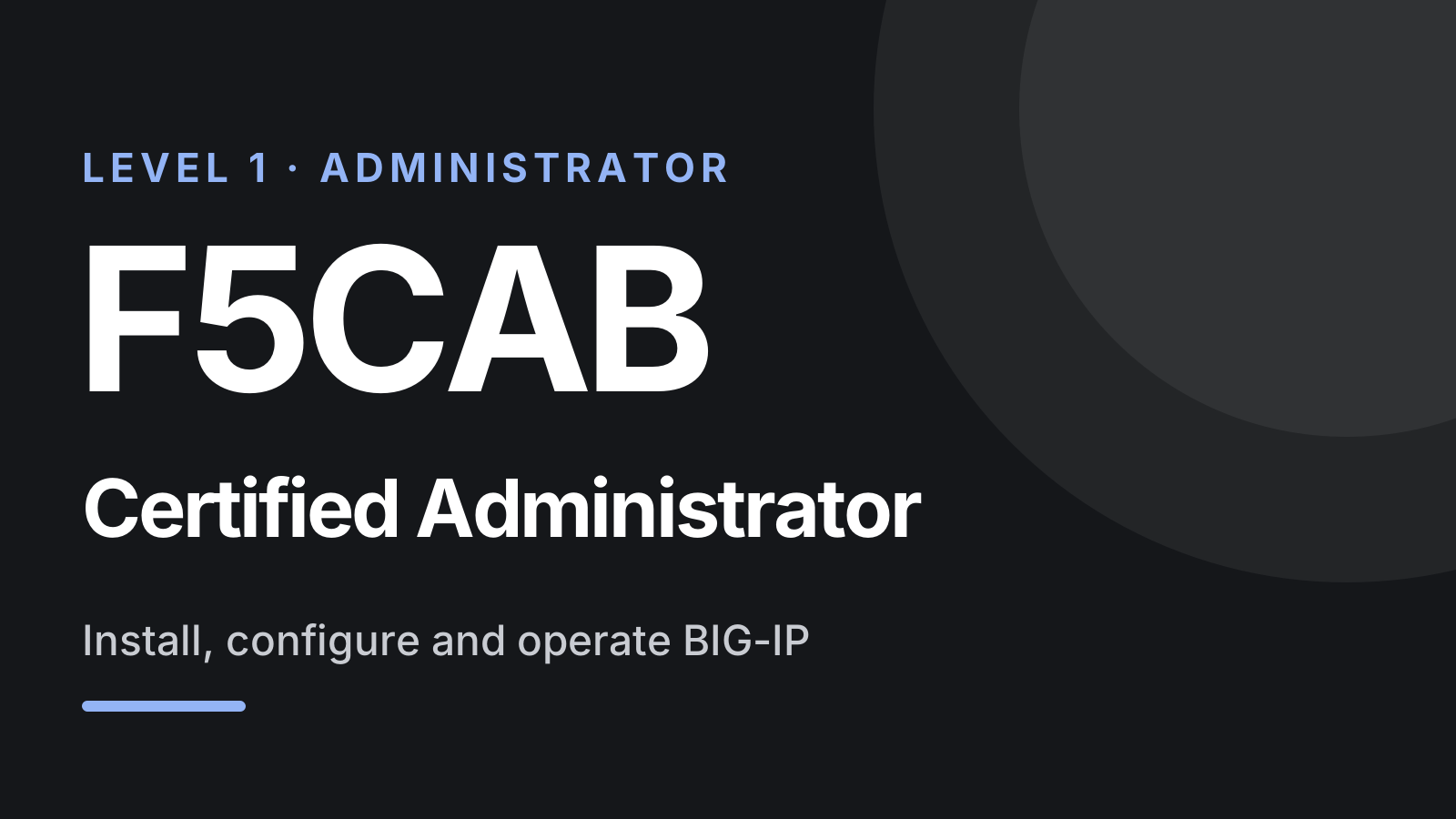
F5 Certified Administrator - BIG-IP
The entry-level course, mapped to the F5 Certified Administrator (F5CAB) blueprint. How traffic is handled, how BIG-IP is installed and configured, and the day-to-day administration you'll do in a real estate. Recorded on a live BIG-IP.
€299,00 EUR
Specialist paths
One module at a time, to the bottom.
Module-specific courses that go deep on one BIG-IP technology: LTM, DNS, ASM or APM. For engineers who have the administrator foundation and want to specialise. Each one is mapped to its 30x exam blueprint and recorded on the lab BIG-IP.
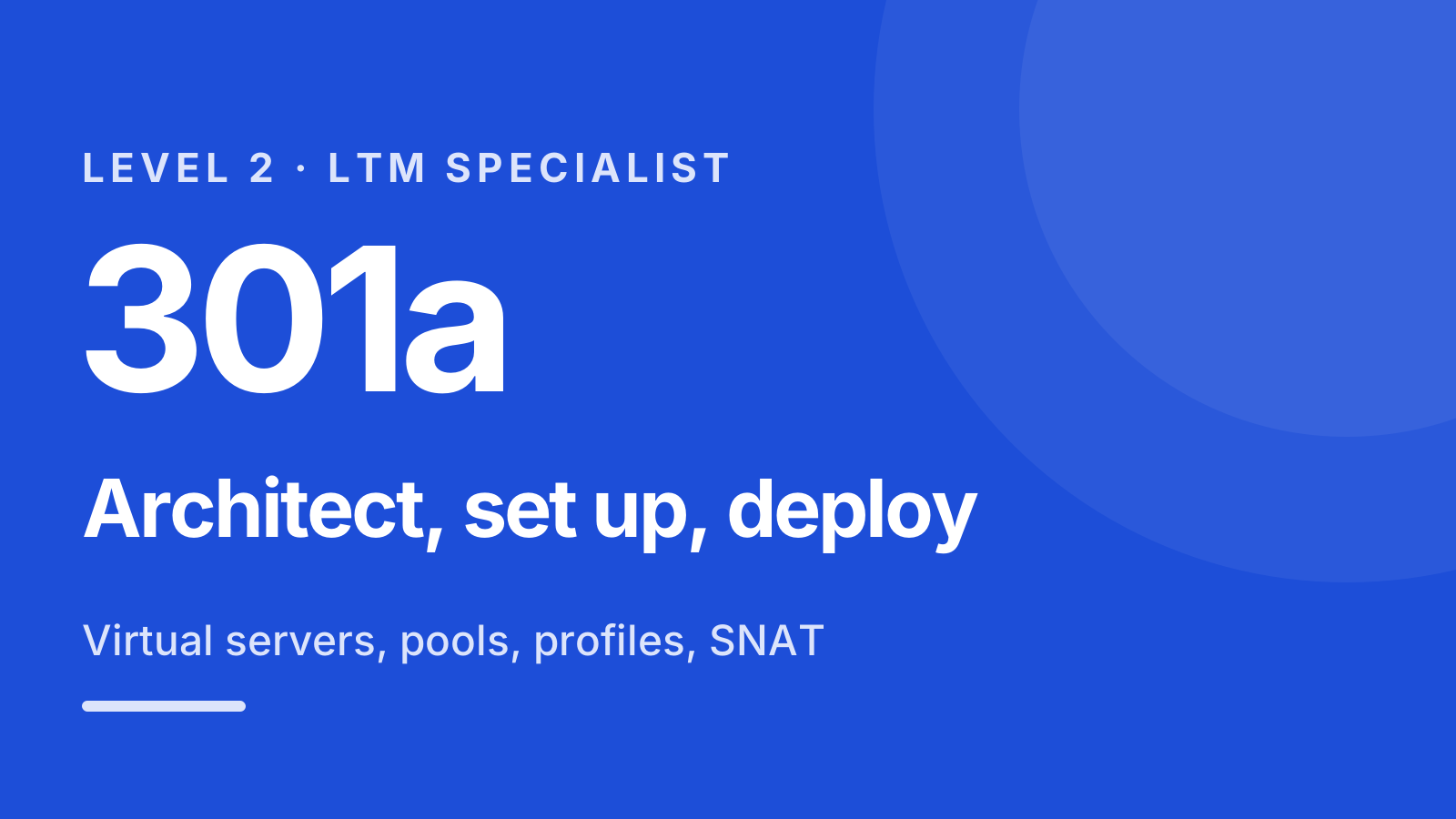
301a BIG-IP LTM Specialist: Architect, Setup and Deploy Course
Mapped to the 301a blueprint. How traffic flows through virtual servers, pools, nodes, profiles and SNAT, so you can design, deploy and reason about LTM with confidence. Taught in the GUI and TMSH on a live BIG-IP, with Postman and PowerShell on the application side.
€499,00 EUR
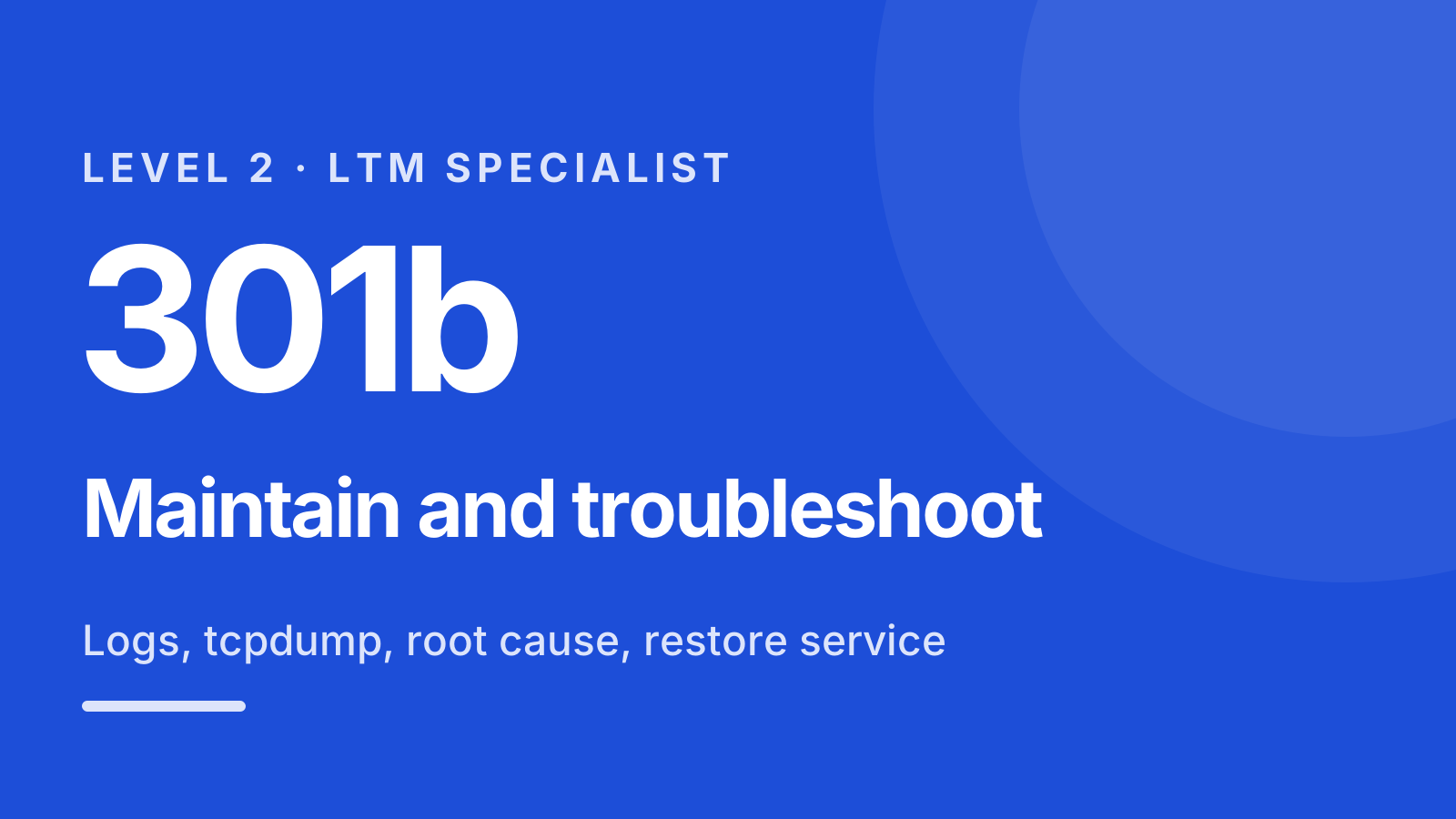
301b BIG-IP LTM Specialist: Maintain and Troubleshoot
Mapped to the 301b blueprint. A structured way to find and fix LTM faults: trace the traffic, compare expected with actual, read the logs and tcpdump, isolate the cause across SSL, profiles, persistence and SNAT, and restore service. Real faults on a live BIG-IP.
€499,00 EUR
302 BIG-IP DNS Specialist Course
Mapped to the 302 blueprint. How BIG-IP DNS steers traffic with wide IPs, pools, topology records, monitors and iQuery, so you can build resilient multi-data-centre DNS and troubleshoot it when it breaks. Taught with dig, nslookup, tcpdump and real DNS traffic on the lab.
€499,00 EUR
303 BIG-IP ASM Specialist
Mapped to the 303 blueprint. How ASM policies are built, tuned and enforced with attack signatures, learning modes, anomaly detection and logging, so you protect the application without breaking it or drowning in false positives. Real attack traffic from Postman and VS Code against a live policy.
€499,00 EUR
304 BIG-IP APM Specialist Course
Mapped to the 304 blueprint. How authentication, authorisation, SSO, VPN and access policies fit together in the Visual Policy Editor, access profiles and session management, so you deliver secure access without wrecking the user experience. Real access flows, real integrations, real troubleshooting.
€499,00 EUR
Buy by module
Already know half of it? Pay for the half you don't.
Every course follows the official F5 blueprint, and every blueprint breaks naturally into between two and five modules. 301a is two. 303 is five. If you've run BIG-IP for years and only need one module before the exam, buy that module on its own for €99. A module is the same material as the full course: the same video lessons, the same live BIG-IP demonstrations, the same knowledge checks, lifetime access.
Full course
From €299
Administrator €299, each Specialist course €499. Every module on the blueprint, the private course community, lifetime access. The right choice if the exam is new ground for you.
Single module
€99
One module from any course, complete. For the engineer who knows the rest and needs to close one gap before the exam.
Your own mix
€99 each
Pick the two or three modules you actually need. Each course page lists its modules, so you can see exactly what is in each one before you buy.
Modules are listed on each course page under Curriculum. Module purchase opens with each course as it launches.