301a · LTM SpecialistOfficial blueprint · 20 objectivesRecorded on live BIG-IPLifetime access
301a · First half of F5-CTS, BIG-IP LTM
BIG-IP LTM Specialist: Architect, Set-up and Deploy
For engineers preparing for the 301a exam. Design and deploy applications on BIG-IP LTM, and understand why each configuration object exists before you place it.
Deployment models, profile selection, virtual server matching order, SNAT, high availability groups, route domains and vCMP, taught against the twenty official 301a blueprint objectives.
Full course €499. Covers both sections of the 301a blueprint. Priority-list members get first access and launch pricing.
Pass the 301a within 90 days, or get a full refund.
Complete the course, sit the exam twice within 90 days, and if you fail both times I refund you in full. See the terms
Status: in build. I'm Graham Mattingley: F5 since 2008, certified since 2012, banking, aviation and government, and I teach every lesson myself.
Course overview
301a is the design and deployment half of the LTM Specialist certification. It asks whether you can take a set of application requirements and build the right configuration, with the fewest objects, in the correct deployment model, and predict what your changes will do to live traffic.
The course works through both blueprint sections: architecting and deploying applications, then setting up, administering and securing the devices those applications run on. Deployment models, profile selection, virtual server matching order, SNAT, high availability groups, route domains and vCMP.
Aligns directly with the official 301a blueprint, covering all twenty objectives across both sections.
What's included
Priority list
Join the 301a priority list
First access, launch pricing, and the occasional build update while I record it.
The outcome
What you will be able to do.
301a does not ask whether you can build a virtual server. It asks whether you can look at a set of application requirements and choose the right one. After this course you will be able to:
- Choose a deployment model on the facts: one arm, two arm, nPath or DSR, and explain what happens to the IP addresses in each
- Deploy an application with the fewest objects, and know which ones are unnecessary
- Select the right profiles: OneConnect, TCP, UDP, FastL4, and the performance trade-off each carries
- Predict virtual server matching order: which one takes the traffic, and why one is being skipped
- Decide when SNAT is required, and how to preserve the original client IP when it is not
- Design multi-tier architectures: SNAT, persistence and SSL placed correctly across tiers
- Secure and administer the device: Self IPs, port lockdown, user roles, partitions, route domains and vCMP
- Predict the effect of a change on existing connections and on new ones, before you make it
You will leave this course able to design an LTM deployment and defend the choices, which is what 301a is actually testing.
Curriculum
Both sections of the 301a blueprint.
Section 1 – Architect and Deploy Applications
Section 2 – Set Up, Administer, and Secure LTM Devices
Included
Private course community
A private community shared with the other members of this course. Membership is permanent.
- Ask questions and get practical advice from people on the same path
- Share real scenarios, problems and solutions
- I'm in there too, and I answer
Optional
Add my time to the course
Every course comes in three packages: the course on its own, the course plus one hour of my 1:1 time (one session or two 30-minute sessions), or the course plus a live weekly Q&A with me while you study. Use the hour to:
- Review your 301a knowledge gaps
- Work through the blueprint areas that are blocking you
- Test your exam readiness with live questions
Package prices are shown at checkout.

Full video course
Animated slides for the concept, then GUI and TMSH demonstrations: deployment model comparisons, profile selection, virtual server matching order and multi-tier architecture, all mapped to the 301a blueprint.

Every configuration, on a live BIG-IP
Guided walkthroughs of deployment models, SNAT selection, profiles, virtual servers, HA groups, partitions, route domains and vCMP guest deployment, on the eight-box lab.

Scenario-based knowledge checks
Assessments after each module, written in the style of the exam. 301a rewards judgement rather than recall, so the questions are scenarios, not definitions.
FAQs
Before you ask.
Does passing 301a give me a certification?
Do I need F5-CA before taking 301a?
How much LTM experience does 301a assume?
Does this course include practical configuration demonstrations?
What should I take after 301a?
Your instructor
I don't teach exam shortcuts. I teach how TMOS actually behaves under production traffic, and how to make confident decisions when it's 2 AM and something's on fire.
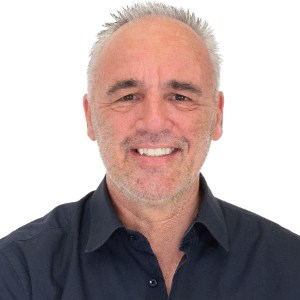
Graham Mattingley
F5 401 Certified Solution Expert · OWASP member
Thirty years in application development, twenty in application delivery, F5-certified for fourteen. I've deployed and secured F5 for banking, aviation and government across Europe, and taught this material face to face to the engineers who run it.
This is the operational knowledge I wish I'd had twenty years ago, distilled from production deployments you won't find in the official training.
How this course is delivered
- Structured video lessons mapped to the twenty 301a blueprint objectives
- Step-by-step configuration walkthroughs in the F5 GUI and TMSH
- Deployment model comparisons against real application requirements
- Guided demonstrations of SNAT, profiles, virtual servers, HA groups, partitions and vCMP
- Modules that progress from application deployment to device administration and security
- Self-paced, so you can study around work
- Design scenarios that build the judgement 301a tests, not the recall it doesn't
Prerequisites
F5 Certified Administrator, BIG-IP is required before sitting 301a. Since May 2025 that is earned by passing F5CAB1 to F5CAB5.
Working LTM knowledge is strongly recommended:
- Confidence with nodes, pools, monitors and virtual servers
- An understanding of how traffic flows through a full proxy
- Familiarity with TCP/IP, routing and NAT
- Comfort in both the GUI and TMSH
A BIG-IP lab is recommended for hands-on practice, but every demonstration is recorded and yours for life, so you can revisit any walkthrough whenever you need it.
Lab licence helpLab licence assistance
I can help you obtain the F5 lab licence and get it installed and running on your own computer.
What happens next
- Join the priority list and I'll tell you the moment enrolment opens
- While I record it, you get the occasional blueprint-aligned LTM scenario to work through
- Priority-list members enrol first, at launch pricing